


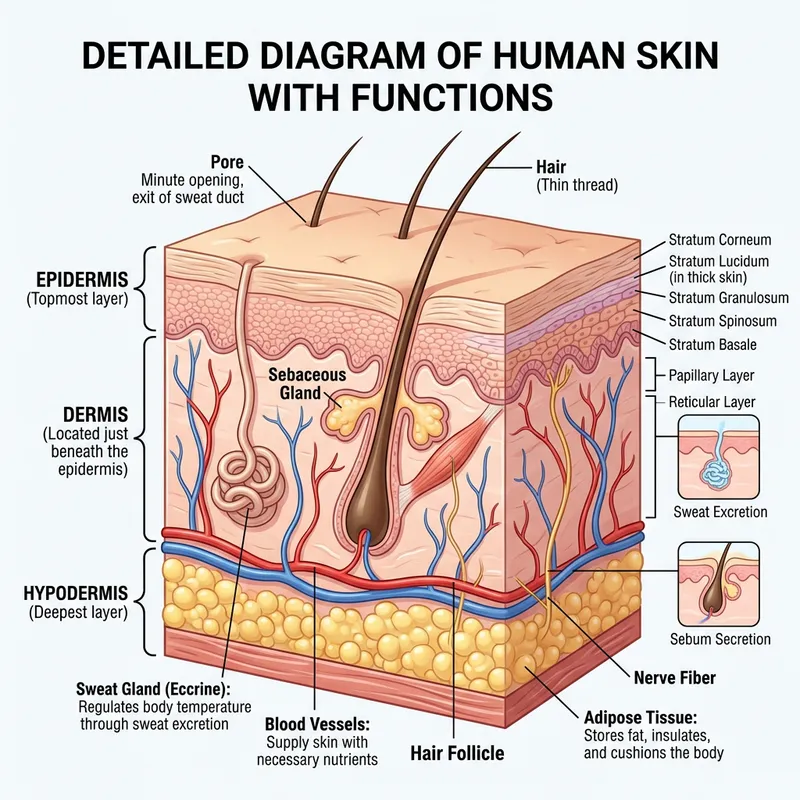
Skin: The Biological Frontier of Health
Skin is far more than an aesthetic canvas; it is the human body’s largest and most dynamic organ. Weighing approximately 15% of your total body weight, it serves as a sophisticated, multi-layered shield that manages everything from microbial defense to thermoregulation.
For the Indian population, understanding skin requires a deep dive into how our unique genetics (Fitzpatrick IV-VI) interact with a high-UV, high-pollution environment.
The Three Pillars of Dermal Architecture
To understand how skin functions, we must look at its structural stratification:
- The Epidermis (The Shield): This is the visible outer layer. It is responsible for creating new skin cells every 28 to 30 days and houses the Melanocytes, which produce the pigment (melanin) that protects us from solar radiation. In India, our epidermis is often more resilient but prone to reactive darkening.
- The Dermis (The Engine): Beneath the surface lies the dermis, containing the “structural proteins”—Collagen and Elastin. This layer also houses sweat glands, oil glands (sebaceous), and nerve endings. It is here that the signs of environmental aging first begin, as pollution and UV rays break down these supporting fibers.
- The Hypodermis (The Foundation): The deepest fatty layer that provides insulation, shock absorption, and connects the skin to the underlying muscle and bone.
The “Barrier First” Philosophy
2026’s Critical Metric
The most significant shift in modern skin science is the focus on the Skin Barrier (Acid Mantle). Your barrier is a microscopic film of lipids and beneficial bacteria that keeps hydration in and irritants out.
In urban India, the barrier is under constant attack. Hard water, high AQI levels, and the use of harsh “whitening” soaps strip away these essential lipids. When the barrier fails, the result isn’t just “dryness”—it manifests as adult acne, chronic sensitivity, and “Urban Grayness.” Maintaining a healthy pH balance (typically between 4.5 and 5.5) is the non-negotiable foundation of all skin health.
Environmental Dermal Stress in the Indian Context
The Indian climate acts as a “biological stress-test” for the skin. Unlike temperate climates, our skin must adapt to High Thermal Stress and Atmospheric Oxidation:
-
UV Index & Melanin: While higher melanin levels provide a natural SPF, they also make the skin more susceptible to Hyper-pigmentation. Even minor inflammation (like a pimple) can trigger the melanocytes to overproduce pigment, leading to long-lasting dark spots.
-
The Humidity-Sebum Cycle: High humidity during the Monsoons increases the skin’s oil production. When mixed with urban dust, this creates a “plug” in the pores, leading to fungal folliculitis—a condition often mistaken for regular acne but requiring entirely different medical care.
Nutri-Dermatology
The Internal Influence
Modern research has confirmed that skin health is a reflection of internal metabolic state. In India, diets high in refined carbohydrates (high Glycemic Index) can trigger insulin spikes that stimulate oil glands. Furthermore, the prevalence of micronutrient deficiencies—specifically Vitamin D, B12, and Iron—is a leading cause of dullness and poor skin healing among the Indian population.
of total transepidermal water loss occurs within 10 minutes of bathing, making immediate post-wash hydration critical. of patients in urban clinics present with damage from Topical Steroid Misuse, often due to non-medical advice. increase in facial pigment spots is observed in high-AQI urban residents compared to rural areas.The Indian Dermal Profile (2026 Data)
Clinical Data
1. The Indian Transepidermal Water Loss (TEWL) Index
-
Regional Variation: Data shows that water loss is highest on the Palms and Soles, followed by the Back and Chin, with the Forearm being the most stable.
-
The Gender Gap in Hydration: Clinical studies indicate that males often experience higher water loss from the skin than females, particularly after water immersion (bathing), despite having thicker skin.
-
The 10-Minute Rule: Research confirms that 56.9% of all skin water loss occurs within the first 10 minutes after bathing. This “Golden Window” is when medical-grade moisturization is most effective.
2. The Epidemic of “Topical Steroid Damaged Face” (TSDF)
-
Prevalence: In screenings of patients with facial skin issues in India, approximately 14.8% to 15% are found to be suffering from steroid abuse.
-
Non-Medical Influence: Shockingly, over 59% of users start using these potent steroid creams based on the recommendation of a friend, relative, or pharmacist rather than a doctor.
-
Clinical Fallout: 90.5% of users who misuse these creams experience adverse effects, with Acne Exacerbation (35.6%) and Erythema (redness – 81.1%) being the most common.
3. Occupational & Socio-Economic Dermal Trends (2026)
Data from 2025–2026 studies in semi-urban and urban Indian settings shows a shift in who is affected by skin diseases and why:
-
The Working Class Burden: Daily-wage workers (28%) and Students (28.7%) are the most represented groups in dermatology clinics, often due to high exposure to environmental stressors.
-
Top 3 Clinical Presentations: 1. Eczematous Disorders (28%): Driven by increasing urbanization and contact with pollutants. 2. Fungal Infections (22.7%): Favored by India’s tropical heat and humidity. 3. Bacterial Infections (9.5%): Often a secondary result of a compromised skin barrier.